


Reducing Future Change
Climate change mitigation refers to actions limiting the magnitude and rate of future climate change by reducing greenhouse gas emissions and/or advancing nature-based solutions. Mitigation efforts are underway in Cleanup, Prevention and Response programs at EPA and include the following activities:
- Land Use and Revitalization.
- Greener Cleanups.
- Circular Economy.
Land Reuse and Revitalization
RE-Powering America’s Lands Initiative
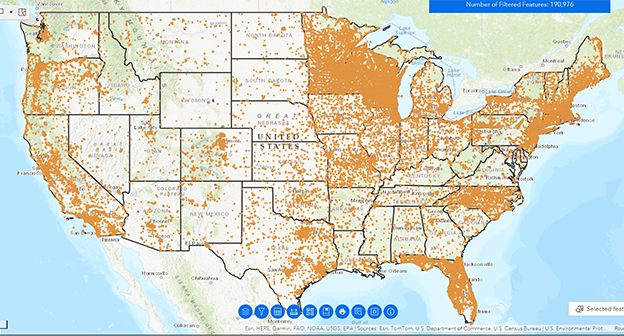
EPA’s RE-Powering America’s Land Initiative encourages renewable energy development on current and formerly contaminated lands, landfills, and mine sites when such development is aligned with the community’s vision for the site. Through reuse of these sites, communities see a property that had been vacant or underutilized for many years turned into a facility that may help improve the local tax base, create jobs, and turn blight into an economic opportunity.
For additional information, visit EPA’s RE-Powering America’s Land Initiative website.
To launch the RE-Powering Mapper, click on the image below.
EPA Brownfields Program
Infill redevelopment of abandoned areas with brownfields following assessment and cleanup can create opportunities for mitigation, adaption and help a community build resilience. Free technical assistance and brownfield grants can help communities screen sites in climate-vulnerable locations to plan cleanup and safe reuses that build resilience.
EPA’s Brownfields Program provides grants and free technical assistance to communities, states, Tribes, and others to assess, safely clean up, and sustainably reuse contaminated properties and promote sustainable and equitable land revitalization. For more information, visit EPA’s Brownfields Program website.
Greener Cleanups
The cleanup of contaminated lands expends energy, water, and other natural or material resources, and may result in considerable GHG emissions.
Incorporating greener cleanup practices can help reduce the GHG emissions associated with cleanup activities, mitigating the adverse impacts of climate change. Greener cleanups at contaminated sites such as Superfund, RCRA, federal facility, brownfield, underground storage tank, and state voluntary actions; protect human health and the environment while minimizing the environmental footprint of cleanup activities.
For additional information, visit EPA’s Greener Cleanups website.
Circular Economy
Decisions about how goods (such as food, plastic packaging, and building materials) are produced, transported, used, and disposed of can make a big difference in the amount of the resources used, greenhouse gases emitted, environmental impacts created, and waste produced. Reducing, reusing, recycling, and composting are strategies that can lessen the environmental impact of goods.
EPA has a broad vision to help the nation address the full impacts of materials on our communities and has set out a transformative vision for our waste management system – one that is inclusive, more equitable, and reflects the urgency of the climate crisis – by releasing a series of strategies that will be dedicated to building a circular economy for all. The National Recycling Strategy focuses on advancing the national municipal solid waste recycling system to create a stronger, more resilient, and cost-effective domestic recycling system. The National Strategy for Reducing Food Loss and Waste and Recycling Organics lays out objectives to prevent the loss and waste of food and increase recycling of organic materials, reduce greenhouse gas emissions, save households and businesses money, and build cleaner, healthier communities. EPA finalized the National Strategy to Prevent Plastic Pollution, which provides an ambitious, equitable approach to reducing and recovering plastics and other materials, as well as preventing plastic pollution from harming human health and the environment.
For more information on this program, visit EPA's Circular Economy website.

Additionally, the Inflation Reduction Act and Bipartisan Infrastructure Law provides robust funding for grant programs focused on recycling supporting nationwide waste reduction and GHG mitigation efforts. For more information on these programs, visit our Transforming U.S. Recycling and Waste Management webpage.