U.S. flag

An official website of the United States government

Here’s how you know

Dot gov

Official websites use .gov
A .gov website belongs to an official government organization in the United States.

HTTPS

Secure .gov websites use HTTPS
A lock (LockA locked padlock) or https:// means you’ve safely connected to the .gov website. Share sensitive information only on official, secure websites.

Emergency

This is not the current EPA website. To navigate to the current EPA website, please go to www.epa.gov. This website is historical material reflecting the EPA website as it existed on January 19, 2025. This website is no longer updated and links to external websites and some internal pages may not work. More information »

    • Environmental Topics
    • Air
    • Bed Bugs
    • Cancer
    • Chemicals, Toxics, and Pesticide
    • Climate Change
    • Emergency Response
    • Environmental Information by Location
    • Environmental Justice
    • Greener Living
    • Health
    • Land, Waste, and Cleanup
    • Lead
    • Mold
    • Radon
    • Research
    • Science Topics
    • Water Topics
    • A-Z Topic Index
    • Laws & Regulations
    • By Business Sector
    • By Topic
    • Compliance
    • Enforcement
    • Laws and Executive Orders
    • Regulations
    • Report a Violation
    • Environmental Violations
    • Fraud, Waste or Abuse
    • About EPA
    • Our Mission and What We Do
    • Headquarters Offices
    • Regional Offices
    • Labs and Research Centers
    • Planning, Budget, and Results
    • Organization Chart
    • EPA History
    • Staff Directory

Breadcrumb

  1. Home
  2. Greening EPA

Energy Efficiency Projects at EPA

Related Links
  • Greenhouse Gas Emissions

As the agency charged with protecting human health and the environment, EPA strives to be a leader in reducing its energy use.

The vast majority of facilities where EPA has operational control are laboratories. Due to the nature of scientific research and the need for high ventilation rates to maintain indoor air quality, laboratories are significantly more energy-intensive than office buildings.

In order to meet and exceed federal energy efficiency goals, EPA considers multiple approaches for laboratory energy improvement, including:

  • Facility consolidation to improve space utilization in EPA-operated buildings.
  • Safe laboratory ventilation rate reduction to use less energy while ensuring air quality in research facilities.
  • Capital improvement projects that result in energy savings, such as right-sizing equipment, retrofitting equipment and similar small-scale projects.
  • Infrastructure replacement projects that provide energy-efficient alternatives for aging mechanical systems.
  • Commissioning, recommissioning and retro-commissioning of entire buildings, wings and individual systems or projects.

Project Examples

Consolidations
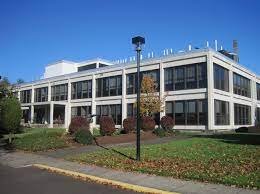
Corvallis Main Building

In 2021, EPA started relocating Region 9 research staff from approximately 45,800 square feet of leased space into EPA’s Pacific Ecological Systems Division (PESD) in Corvallis, Oregon. EPA is also in the process of consolidating its operations from the Willamette Research Station, which occupied 13,300 square feet in Corvallis, Oregon, into the PESD. Through this consolidation effort, EPA reduced laboratory square footage and renovated existing laboratory space in the Corvallis Main Laboratory. 

This consolidation will significantly reduce EPA’s energy intensity and Scope 1 and 2 greenhouse gas emissions. It will also reduce the agency’s operating costs, including rent and annual energy costs.

Infrastructure Replacement Projects (IRP)

EPA is planning a multi-phase IRP at its Ecosystem Process Division (EPD) in Athens, Georgia. The IRP has several energy performance improvement components, including: 

  • Converting the existing laboratory HVAC system from constant volume to variable air volume.
  • Replacing air-handling units, exhaust fans, and supply and exhaust air valves.
  • Replace the building automation system.
  • Replacing the chiller and boiler plants.

The multi-phase IRP is estimated to result in an annual energy savings of over 2 billion Btus and once completed, EPA’s Region 4 Laboratory Services and Applied Science Division location will consolidate into the EPD. 

Another IRP under design in EPA’s Robert S. Kerr Environmental Research Center in Ada, Oklahoma, will  feature major mechanical and electrical infrastructure upgrades, including new air handling units, chillers, heat pumps, upgraded fume hood controls, lighting replacements, and upgraded ground source heat pump infrastructure.  

More information is available about energy efficiency projects and results at EPA:

  • Energy Efficiency at EPA
  • EPA’s Strategic Sustainability Performance Plan

Greening EPA

  • EPA Sustainability Plans
  • EPA Sustainability Progress
  • Federal Requirements
  • Energy and Emissions
    • Energy Efficiency
    • Greenhouse Gases
    • Renewable Energy
  • Green Buildings
    • Construction & Renovation
    • Existing Buildings
    • Facility Resiliency
  • Water Management
    • Stormwater Management
  • Green Practices
Contact Us About Greening EPA
Contact Us About Greening EPA to ask a question, provide feedback, or report a problem.
Last updated on November 5, 2024
  • Assistance
  • Ayuda
  • Arabic
  • Chinese (simplified)
  • Chinese (traditional)
  • Aide
  • Asistans
  • Korean
  • Assistência
  • Russian
  • Tulong
  • Vietnamese
United States Environmental Protection Agency

Discover.

  • Accessibility Statement
  • Budget & Performance
  • Contracting
  • EPA www Web Snapshot
  • Grants
  • No FEAR Act Data
  • Plain Writing
  • Privacy
  • Privacy and Security Notice

Connect.

  • Data
  • Inspector General
  • Jobs
  • Newsroom
  • Regulations.gov
  • Subscribe
  • USA.gov
  • White House

Ask.

  • Contact EPA
  • EPA Disclaimers
  • Hotlines
  • FOIA Requests
  • Frequent Questions

Follow.