


Meet EPA Scientist Marilyn TenBrink
Marilyn TenBrink is both scientist and poet. As a transdisciplinary scientist, she studies the behavior of integrated systems and scientific fields. She also helped develop GIWiz: an interactive web application that connects communities to EPA’s green infrastructure tools and resources.
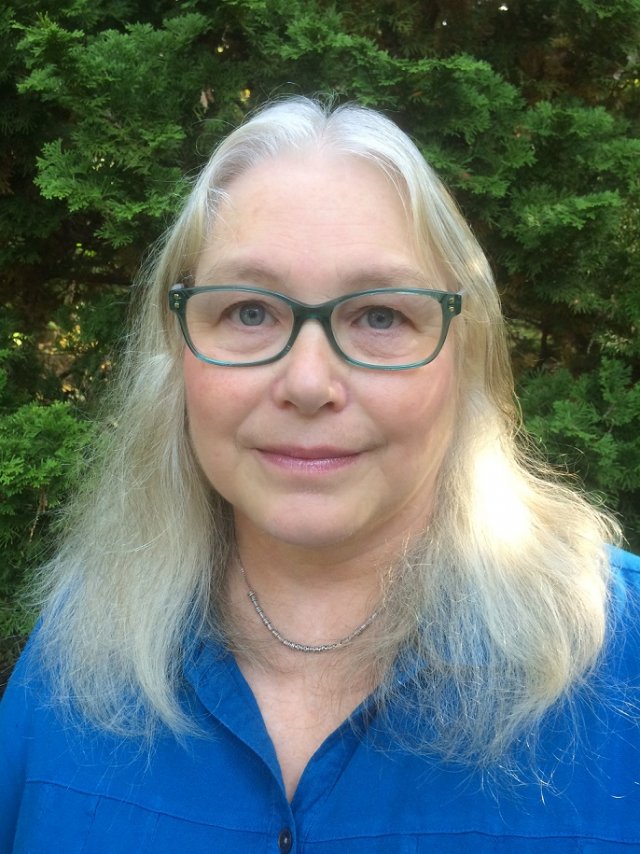
Tell us about your background.
I grew up in western Washington State, where nature and people are right next to each other and quickly changing. I have bachelor’s degrees in Oceanography and Chemistry from the University of Washington and I did my graduate work at Columbia University where I received an MS in Geology and a PhD in Environmental Geochemistry.
I started going to sea as a research tech with the University of Washington when I was 19 and have worked as a research scientist and science manager ever since. In college, I was one of two women in my second and third year physics classes, and at the time female scientists could not berth on federal research ships. It is heart-warming to see the ever-increasing diversity among scientists today.
On the personal side, I have three daughters (all in STEM) and my husband is also a scientist. I like to watch trees grow, discover stories about my pioneering ancestors, and walk in the rain.
When did you first know you wanted to be a scientist?
I knew around age seven, when a family friend who was an amateur scientist gave me a magnifying glass to look at beach sand. Though there were a few years where I was pulled between creative writing and science.
How does your science matter?
Right now my research is transdisciplinary, focusing on decision science, systems science, and the integration of environmental sciences with social sciences. I work primarily on sustainable community and water research, along with some other cross-cutting activities.
My research helps identify and implement more effective ways of using existing scientific knowledge to understand how stakeholders make decisions. I also develop tools that integrates this data into decision-making and sustainability practices.
What do you like most about your research?
Asking the ‘why?’ and ‘how?’ questions. Science is the continuous discovery of new or refined functions. Learning all the time and sharing that learning with others is quite enjoyable.
If you could have dinner with any scientist, past or present, who would it be? What would you ask him or her?
Leanardo DiVinci. I would ask him what he found most fascinating about his time and how that interest would drive his explorations in the present day.
If you weren’t a scientist, what would you be doing?
Writing more poetry, and still traveling a lot.
If you could have one superpower, what would it be and why?
Teleporting. Having family and friends distributed around the world makes it tough to spend time together. I’ve got parents in Seattle, in-laws in London and Israel, a daughter in Italy, another daughter who was in Holland, and the other daughter is going to California—so we’re all over the place.
Any advice for students considering a career in science?
Go for it! Careers in science are particularly satisfying for people who are curious, patient, enjoy change, and want their work to be useful. There are also a variety of jobs in science: you can be in research, science application, or support—you don’t necessarily have to be a math whiz or wear a lab coat!
What do you think the coolest scientific discovery was and why?
This is not a recent discovery, but a huge one: microorganisms. I think that the shift from imagining the ‘unknown world’ to the ability to observe and realize that there is life, structure, interaction, and response at scales smaller than the human eye could see was a game-changer. The discovery of microorganisms changed not only what we knew about life and health, it also changed how we viewed the role of science and acceptance of uncertainty.
What do you think is our biggest scientific challenge in the next 20/50/100 years?
The decline in scientific education. It detrimentally affects the resources and brain-power put towards recognizing, understanding, and solving problems caused by the unsustainable use of natural resources on Planet Earth.
Whose work in your scientific field are you most impressed by?
I’ve had a few scientific fields—so I’d say Wally Broecker in Earth Sciences and Lawrence “Larry” E. Susskind in Environmental Policy and Planning. Both of these people were key thought leaders in research areas that are now mainstream: Professer Broecker for climate change, and Professor Susskind for public engagement in environmental management.
You’re stranded on a desert island with a community of other survivors – what is your job?
I’d probably end up with a few roles: problem solver, peace maker, and safety manager.
Editor's Note: The opinions expressed herein are those of the researcher alone. EPA does not endorse the opinions or positions expressed.