


21st Annual EPA Drinking Water Workshop: Small System Challenges and Solutions
Workshop Sessions as Public Webinars
For those unable to attend the workshop, opportunities to benefit from the technical session presentations are being provided in a virtual setting as part of the Small Drinking Water Systems Webinar Series. Extended PFAS webinars were held on September 24 and October 29 and extended lead (Pb) talks are being held on December 3 and January 28. Recordings of the webinars, schedules, announcements, and registration are posted to the series website.
Focus and Agenda | Attendees | Certificates | Committee | History | Small Systems | Resources
Focus and Agenda

The 21st Annual EPA Drinking Water Workshop, which took place on September 17-19, 2024 in Cincinnati, Ohio, was hosted by EPA's Office of Research and Development and Office of Water in partnership with the Association of State Drinking Water Administrators (ASDWA).
The workshop focus was on PFAS and lead (Pb) topics, and was designed for EPA and Tribal, state, and territory government agencies responsible for drinking water regulations compliance and treatment technologies permitting. It provided current technical and regulatory information, resources, and training needed to help in building systems capacity and sustainability and with providing equitable access to drinking water. The focus on specific topics and government agencies allowed EPA and ASDWA to optimize networking, increase engagement, and promote a shared learning experience.
The workshop included technical information sessions, interactive training sessions, breakout group roundtable discussions, topical deep dive and posters session, regional networking session, and other networking opportunities.
General inquiries about the 2024 workshop may be directed to ICF, contractor to EPA, at EPA-Drinking-Water-Workshop@ICF.com.
Attendees
The 2024 workshop was open to EPA; ASDWA; and Tribal, state, and territory agencies responsible for public water systems (primacy enforcement responsibility). There were 242 attendees representing these agencies from across the United States.
Attendance Certificates
Attendees had the opportunity to receive certificates of attendance for participating. Certificates are typically sent via email within three-four weeks following the workshop—EPA cannot guarantee acceptance of certificates for continuing education or submit certificates to states or organizations.
Planning Committee and Support Team
The workshop was planned by a committee of EPA and ASDWA representatives with a broad range of drinking water technical, regulatory, and communications expertise. The committee is supported by a team contractors to EPA with expertise in event planning and coordination.
Planning Committee Members
EPA Office of Research and Development
- Laura Boczek (Committee Co-Chair), Research Microbiologist
- Michelle Latham (Committee Co-Chair), Water Technical Support Center Director
- Thomas F. Speth, Senior Science Advisor
- Jonathan Pressman, Drinking Water Treatment and Distribution Branch Chief
- Regan Murray, Water Infrastructure Division Director
- Sandhya Parshionikar, Associate National Program Director for Water Treatment and Infrastructure
- Marie Schneider, Communications Specialist (ORAU contractor to EPA)
- Grace Davis, Research Program Support Specialist (ORAU contractor to EPA)
EPA Office of Water
- Sarah Bradbury, Physical Scientist
- Michael Finn, Environmental Engineer
- Gregory Carroll, Standards and Risk Management Division Associate Director
- Alison Dugan, Environmental Engineer
- Andrew Pizzala, Environmental Protection Specialist
- Alex Horansky, Physical Scientist
EPA Region 8
- Troy D. Hill, Regional Science Liaison
Association of State Drinking Water Administrators
- Kevin Letterly, Government Affairs Manager
- Alan Roberson, Executive Director
Event Planning and Coordination Team
ICF (Contractor to EPA)
- Kaedra Jones, Director
- Sam Whately, Senior Health Science Meeting Planner
- Leah Hennelly, Health Science Conference and Event Coordinator
- Andrew Maresca, Environmental Health Science Researcher
Workshop History
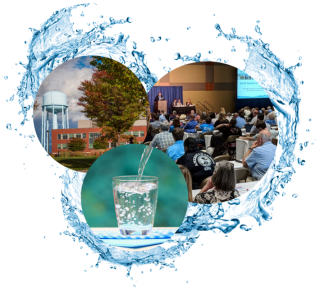
To support the efforts of state and local officials to assist small systems, EPA and ASDWA have held an annual workshop for the past 20 years to provide timely information on a variety of drinking water topics relevant to small systems.
When the first workshop was held in 2004, it was by invitation only and designed as an educational opportunity for state staff working with small communities to install arsenic treatment technologies. In 2008, at the encouragement of state agencies, the workshop was opened to the public and expanded to include small drinking water system distribution, water quality, source water, treatment, and operations topics.
In 2023, we were excited to celebrate the 20-year anniversary of our workshop with close to 400 attendees. Online Agenda
About Small Systems
There are 145,720 active public water systems in the United States (including territories). Of these, 95% (138,923) are considered small systems under the Safe Drinking Water Act, meaning they serve 10,000 or fewer people.
- Small systems serving 500 or fewer people: 114,928
- Small systems serving 501-3,300 people: 18,753
- Small systems serving 3,301-10,000 people: 5,242
Data is from EPA’s Government Performance and Results (GPRA) Tool (2024 Quarter 1).
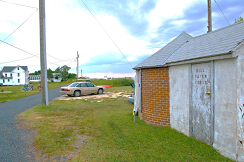
While many of these active small systems consistently provide safe, reliable drinking water to their customers, many face a number of challenges in their ability to achieve and maintain system sustainability. Some of these small system challenges include lack of expertise to choose, operate, and maintain systems; lack of financial resources; aging infrastructure; limited options for residual disposal; and state agencies with limited resources to support the large number of small systems. EPA's research is developing tools, technologies, and approaches to help small systems lower costs and provide safe drinking water now and in the future.
Learn more about small drinking water systems
Additional Resources
Webinar Series
In addition to this annual workshop, EPA also holds a free monthly webinar series. The Small Drinking Water Systems Webinar Series provides a forum for EPA to communicate directly with drinking water professionals to provide training and foster collaboration and dissemination of information. Beginning in January 2024, some webinars in the series are now being held in partnership with ASDWA.
Webinar topics vary each month and are primarily designed for Tribal, state, and territory government agencies responsible for drinking water regulations compliance and treatment technologies permitting. However, others may also benefit from the webinars, including water system operators, technical assistance providers, NGOs, local government personnel, academia, and private sector. This series will continue to provide the latest information on solutions for challenges facing small drinking water systems, but will now be more of an extension of the in-person workshop as it will include presentations that were given during the events. Webinars in this series are typically held on the last Tuesday of the month, from 2 to 3 p.m. ET.