


Drinking Water Distribution Systems
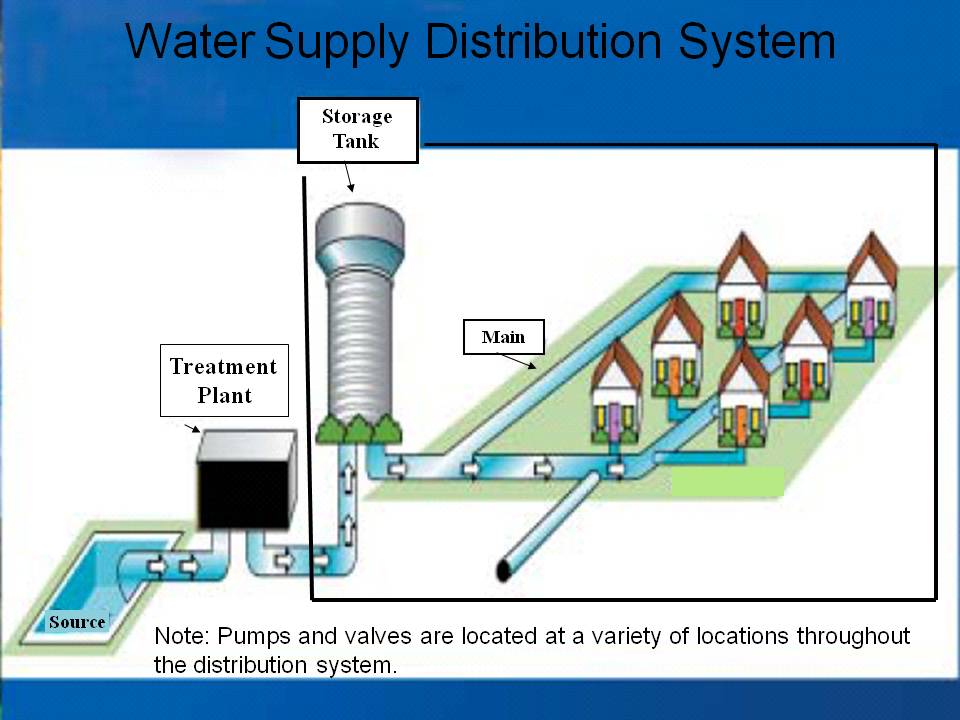
- pipes
-
storage facilities
-
components that convey drinking water
Water distribution systems meet fire protection needs for:
-
cities
-
homes
-
schools
-
hospitals
-
businesses
-
industries
-
other facilities
Public water systems depend on distribution systems to provide an uninterrupted supply of pressurized safe drinking water to all consumers. Distribution system mains carry water from either:
-
the treatment plant to the consumer; or
-
the source to the consumer when treatment is absent.
Distribution systems span almost one million miles in the United States. They represent the vast majority of physical infrastructure for water supplies. Distribution system wear and tear can pose intermittent or persistent health risks.
Water quality and the distribution system
New pipes are added to distribution systems as development occurs. The additions result in a wide variation in:
-
Pipe sizes
-
Materials
-
Methods of construction
-
Age within individual distribution systems and across the nation
As these systems age, deterioration can occur due to corrosion, materials erosion, and external pressures. Deteriorating water distribution systems can lead to:
-
Breaches in pipes and storage facilities
-
Intrusion due to water pressure fluctuation
-
Main breaks
Documents about distribution system problems and recommendations on reducing risk
Read the support documents:
Protecting water quality in distribution systems
The following EPA drinking water regulations pertain to distribution systems:
-
Surface Water Treatment Rules (disinfectant residual and sanitary survey requirements)
-
Stage 1 and 2 Disinfectants and Disinfection Byproducts Rules (DBPR) (monitoring for DBPs in the distribution system)
-
Ground Water Rule (sanitary surveys)
-
Revised Total Coliform Rule (monitoring for bacterial contamination in distribution systems)
Cross Connection Control Manual
-
Health officials
-
Waterworks personnel
-
Plumbers
-
Any others involved directly or indirectly in water supply and distribution systems
It is intended to be used for educational, administrative, and technical reference in conducting cross-connection control programs.