U.S. flag

An official website of the United States government

Here’s how you know

Dot gov

Official websites use .gov
A .gov website belongs to an official government organization in the United States.

HTTPS

Secure .gov websites use HTTPS
A lock (LockA locked padlock) or https:// means you’ve safely connected to the .gov website. Share sensitive information only on official, secure websites.

Emergency

This is not the current EPA website. To navigate to the current EPA website, please go to www.epa.gov. This website is historical material reflecting the EPA website as it existed on January 19, 2025. This website is no longer updated and links to external websites and some internal pages may not work. More information »

    • Environmental Topics
    • Air
    • Bed Bugs
    • Cancer
    • Chemicals, Toxics, and Pesticide
    • Climate Change
    • Emergency Response
    • Environmental Information by Location
    • Environmental Justice
    • Greener Living
    • Health
    • Land, Waste, and Cleanup
    • Lead
    • Mold
    • Radon
    • Research
    • Science Topics
    • Water Topics
    • A-Z Topic Index
    • Laws & Regulations
    • By Business Sector
    • By Topic
    • Compliance
    • Enforcement
    • Laws and Executive Orders
    • Regulations
    • Report a Violation
    • Environmental Violations
    • Fraud, Waste or Abuse
    • About EPA
    • Our Mission and What We Do
    • Headquarters Offices
    • Regional Offices
    • Labs and Research Centers
    • Planning, Budget, and Results
    • Organization Chart
    • EPA History
    • Staff Directory

Breadcrumb

  1. Home
  2. Enforcement
  3. Enforcement and Compliance Assurance Annual Results for Fiscal Year 2024

Enforcement and Compliance Assurance Annual Results for FY 2024: Protecting Health and the Environment

“EPA’s enforcement and compliance assurance accomplishments this fiscal year were anchored by the principle of upholding the rule of law to protect public health and the environment. Everyone living in the United States deserves to be able to breathe clean air, drink safe water, and live in communities free from toxic chemical exposure.”

David M. Uhlmann, Assistant Administrator of EPA's Office of Enforcement and Compliance Assurance

The Environmental Protection Agency’s enforcement and compliance assurance program is committed to ensuring clean air, safe drinking water, healthy rivers and streams, and reduced exposure to toxic chemicals in communities across the Nation. In fiscal year 2024, EPA delivered outcomes in all these key areas that directly impact human health and the environment, while also taking decisive action to reduce climate change and promote environmental justice in communities overburdened by pollution. Precedent-setting cases, record-breaking penalties, and increased onsite inspections to address noncompliance helped protect public health and the environment and will provide benefits in the years ahead.

The following highlights EPA’s efforts to fulfill the agency’s mission to protect human health and the environment, reduce exposure to harmful pollution and clean up contamination in our communities.

Cleaner Air and Climate Pollutant Reductions

EPA conducted compliance monitoring and finalized settlement agreements to ensure compliance with the Clean Air Act. Climate super pollutants, toxic and hazardous air pollutants, and criteria air pollutants associated with air quality standards were reduced as a result of EPA’s enforcement and compliance assurance work. Outcomes include:

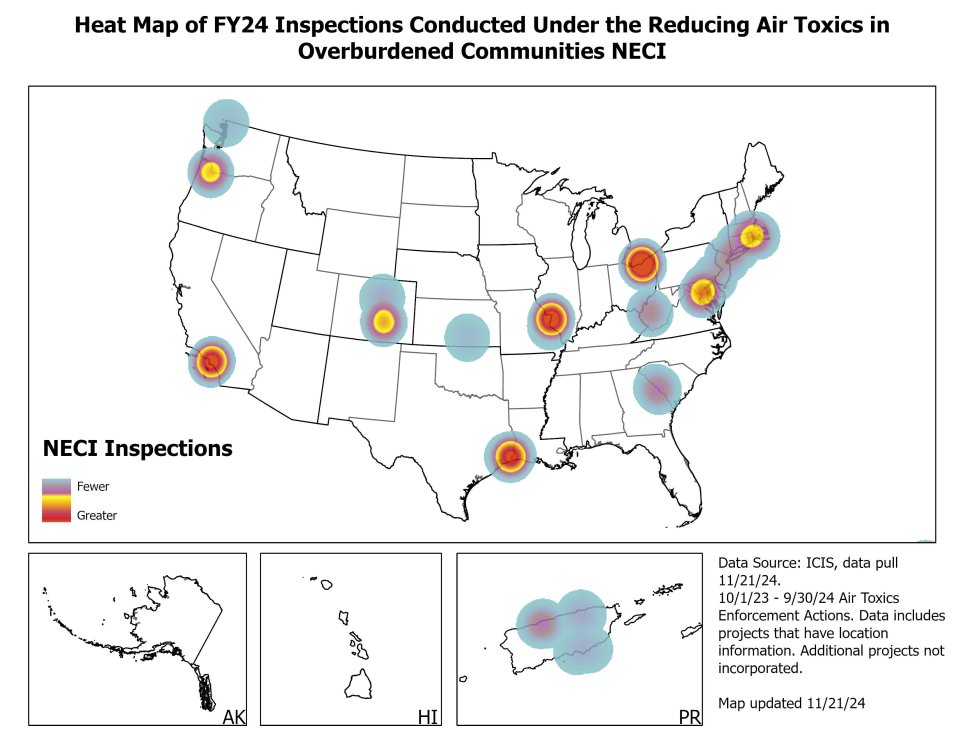
  • Conducting over 184 inspections in the 27 communities included in EPA’s air toxics initiative, which focuses on overburdened and underserved communities;
  • Concluding  enforcement actions, which reduced 636 tons of smog-producing volatile organic compounds (VOCs) and 95 tons of hazardous air pollutants (HAPs) per year;
  • 2.7 million metric tons of carbon dioxide equivalent greenhouse gas emissions reduced, treated, or prevented;
  • 41 M pounds of emissions prevented from mobile sources such as cars and trucks; and
  • 51 defendants were charged and over $6.6M in criminal fines were paid by defendants related to illegal modification of vehicle emission monitoring systems.
Cleaner Air: Case in Focus

In February 2024, EPA reached a settlement with Allied Waste Niagara Falls Landfill, LLC (Allied) for Clean Air Act violations at its landfill in Niagara Falls, NY. Under the settlement, Allied will pay a $671,000 penalty and operate a gas collection and control system to reduce the amount of harmful chemicals, primarily methane, as well as other harmful organic compounds, released into the air. In addition to causing adverse climate effects, these pollutants are known or suspected to be carcinogens and to cause damage to the kidneys, liver, and central nervous system. In addition to the estimated elimination of 86,000 metric tons of CO2 equivalent methane emissions, the gas collection and control system that Allied will operate and the operational changes it will implement will prevent an additional 32 metric tons of non-methane landfill gas emissions per year. These improvements will also provide safeguards from toxic releases to air to benefit the health of the people working and living near this landfill.

Heat Map of FY24 Inspections Conducted Under the Reducing Air Toxics in Overburdened Communities NECI

Safe Drinking Water and Recreational Water
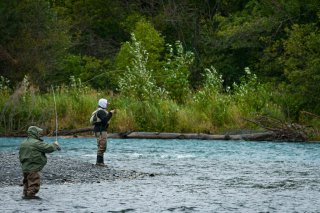
A few people fishing in a river
Image depicts two people fishing

EPA conducted compliance monitoring and finalized settlement agreements to ensure compliance with the Safe Drinking Water Act (SDWA) and the Clean Water Act for public access to safe drinking water and other water resources. The agency also worked to ensure community water systems are resilient against the increasing number of cyberattacks. Discharges and pollutants impacting our nation’s water were reduced because of enforcement and compliance assurance work completed in FY 2024. Outcomes include:

  • Over 1.5 million people protected by SDWA enforcement.
  • Over 331 million gallons of untreated discharge eliminated.
  • Restored or created over 4,400 acres of wetlands.
  • EPA led or accompanied state agencies on 238 community water systems (CWS) inspections and performed off-site compliance monitoring of 133 systems.
  • Conducted cybersecurity compliance assessments during 206 of the 261 on-site inspections at CWSs.

Safe Drinking Water: Case in Focus

In August 2024, the San Carlos Apache Tribe agreed to continue its work to bring the San Carlos Wastewater Treatment Facility and three drinking water systems owned and operated by the Tribe into compliance with the Clean Water Act and the Safe Drinking Water Act. Under the agreement, the Tribe will submit a compliance plan detailing the steps it will take to prevent future unauthorized discharges and corrective action plans that will guide the specific work needed to address significant deficiencies identified in 2022 at the Upper Seven Mile, Bylas, and Lower Peridot drinking water systems.

Cleaning Up Contaminated Lands

EPA’s Superfund enforcement program revitalizes communities and remediates areas scarred by pollution. The Superfund enforcement program continued its mission to ensure the cleanup of contaminated sites and restore them to productive use, especially in overburdened and underserved communities that have borne more than their share of harmful pollution. Outcomes include:

  • Completed 84 enforcement agreements, along with 29 comfort/status letters, at 97 Superfund sites for site investigations, cleanup, and returning property to productive reuse.
  • Finalized settlement agreements resulting in cleanups in communities where approximately 611,662 people live within a one-mile radius of a Superfund site with 96% (584,184) living in communities already overburdened with pollution.
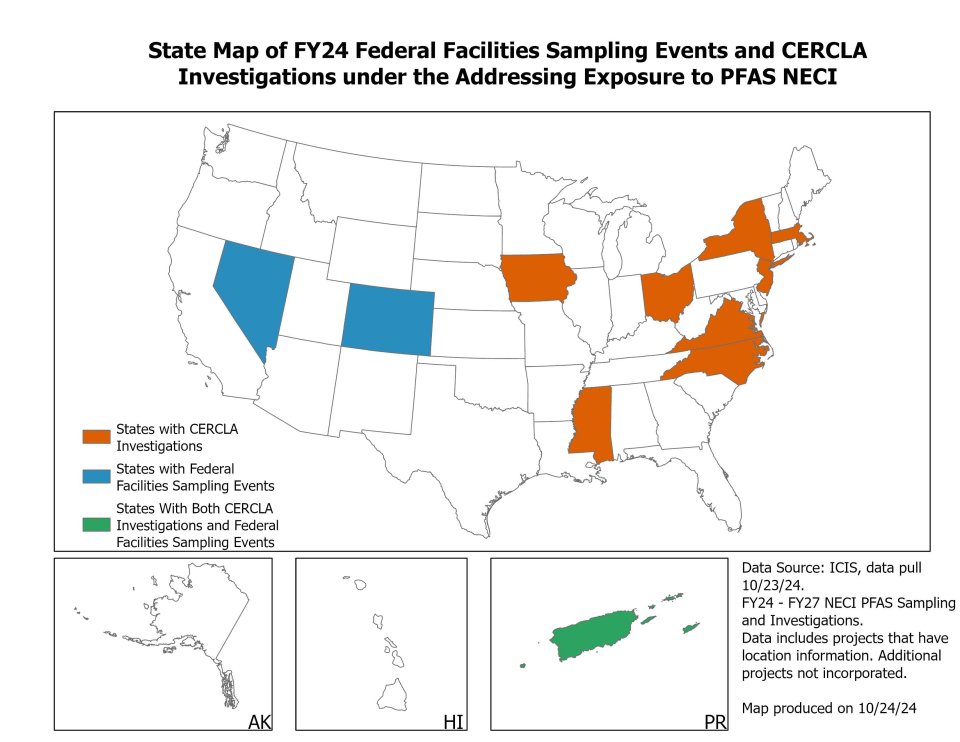
  • Conducted sampling and assessments to evaluate potential contamination at 11 major per- and polyfluoroalkyl (PFAS) manufacturing facilities across the Nation as important steps towards holding accountable those who are responsible for the PFAS contamination at those facilities.
Land Cleanup: Case in Focus

In July 2024, EPA issued a unilateral administrative order (UAO) to the Lower Duwamish Waterway Group (LDWG) (The Boeing Company, city of Seattle, and King County, WA) to start critical cleanup work at the Lower Duwamish Waterway Superfund site in Washington State. The UAO, valued at $96 million, will allow in-river work to begin, while a settlement addressing the entire cleanup is expected to be finalized in the near future. 

The UAO benefits the surrounding community by ensuring cleanup proceeds while further negotiations with potentially responsible parties or PRPs are underway. The waterway poses a risk to human health and the environment and is contaminated with polychlorinated bisphenols (PCBs), arsenic, carcinogenic polycyclic aromatic hydrocarbons, dioxins, and furans. Eating fish and shellfish from the waterway and contact with the contaminated sediments also pose health threats. EPA issued this UAO to ensure work could begin during the construction window to protect migrating fish, moving cleanup forward and preserving access to waterway resources relied upon by area Tribes and communities.

State Map of FY24 Federal Facilities Sampling Events and CERCLA Investigations under the Addressing Exposure to PFAS NECI

Reducing Toxic Chemicals Exposure

Lead-Based Paint Work Area
Image shows lead abatement work.

Toxic chemicals, pesticides, and other hazardous substances are released from a variety of sources to the air, water, and land and can seriously impact human health and the environment. Chemicals include lead, polychlorinated biphenyl (PCBs), PFAS, and hundreds of other substances. EPA conducted compliance monitoring and concluded cases to address violations under an array of statutes that govern chemicals, including the Federal Insecticide, Fungicide, and Rodenticide Act, Toxic Substances Control Act, Emergency Planning and Community Right to Know Act, Resource Conservation and Recovery Act, and others.

EPA’s enforcement and compliance assurance work completed in FY 2024 reduced exposure to hazardous substances in many ways. Outcomes include:

  • 3 million pounds of toxics and pesticides to be reduced, treated, or eliminated.
  • 154 accident prevention and risk management cases under the Clean Air Act.
  • 600 million pounds of coal combustion residuals minimized, or properly disposed.
  • Over 180,000 pounds of toxics and pesticides reduced, treated, or eliminated in overburdened communities.

Reduced Toxic Chemicals Exposure: Case in Focus

In May 2024, EPA filed a consent agreement and final order (CAFO) against J. Da Silva Properties, LLC regarding violations of the Lead-Based Paint Disclosure Rule under section 1018 of the Residential Lead Based Paint Hazard Reduction Act. The Disclosure Rule ensures that purchasers and renters of housing built before 1978 receive the information necessary to protect themselves and their families from lead-based paint hazards. The company owns six housing buildings, totaling 39 units, in Danbury, CT and failed to provide the appropriate information to multiple lessees. As part of the settlement, the company paid a cash penalty of $68,078. Additionally, the company will implement a supplemental environmental project valued at about $44,000 at two of its properties to remove, dispose, and replace lead-based paint containing materials and certify compliance with the Disclosure Rule.

Enforcement

  • Enforcement Basics
  • National Enforcement and Compliance Initiatives
    • Mitigating Climate Change
    • Addressing Exposure to PFAS
    • Protecting Communities from Coal Ash Contamination
    • Reducing Air Toxics in Overburdened Communities
    • Increasing Compliance with Drinking Water Standards
    • Chemical Accident Risk Reduction
  • Enforcement and Compliance Assurance Annual Results for Fiscal Year 2024
    • Protecting Health and the Environment
    • Climate Change
    • Environmental Justice
    • Year in Review
    • Criminal Enforcement
    • Civil Enforcement
    • Superfund Enforcement
    • Federal Facilities
    • Compliance Assurance
    • Maps
    • Data and Trends
  • Air Enforcement
  • Water Enforcement
  • Waste, Chemical and Cleanup Enforcement
  • Criminal Enforcement
  • Enforcement at Federal Facilities
  • Data and Results
  • Policy, Guidance and Publications
Enforcement: Contact Us
Enforcement: Contact Us to ask a question, provide feedback, or report a problem.
Last updated on December 5, 2024
  • Assistance
  • Ayuda
  • Arabic
  • Chinese (simplified)
  • Chinese (traditional)
  • Aide
  • Asistans
  • Korean
  • Assistência
  • Russian
  • Tulong
  • Vietnamese
United States Environmental Protection Agency

Discover.

  • Accessibility Statement
  • Budget & Performance
  • Contracting
  • EPA www Web Snapshot
  • Grants
  • No FEAR Act Data
  • Plain Writing
  • Privacy
  • Privacy and Security Notice

Connect.

  • Data
  • Inspector General
  • Jobs
  • Newsroom
  • Regulations.gov
  • Subscribe
  • USA.gov
  • White House

Ask.

  • Contact EPA
  • EPA Disclaimers
  • Hotlines
  • FOIA Requests
  • Frequent Questions

Follow.