


Public Participation Guide: Situation Assessments
What is a Situation Assessment?
A situation assessment is conducted for the purpose of understanding the needs and conditions of your project and stakeholder community in order to design an effective public participation process.
It consists of gathering information to determine the public participation program and techniques that are feasible and most appropriate for the circumstances.
At the conclusion of a situation assessment, you should have enough information to determine the level of public participation for your project or decision and to design the public participation process.
Situation assessments can range from limited and informal to intensive and time-consuming. Typically, more formal situation assessments result in more detailed recommendations for the public participation process.
Outcomes from a Situation Assessment
Regardless of the level of formality and rigor of the effort, all situation assessments should result in the following key findings:
- the key stakeholder voices that must be engaged for a credible process
- the main stakeholder concerns, issues, and interests
- the specific opportunities where public input can help to shape the decision
- any issues or constraints that may affect public participation
Why do a Situation Assessment?
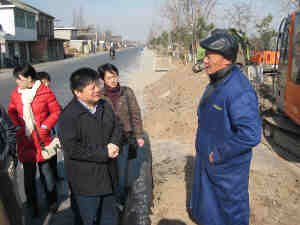
The main purpose of a situation assessment is to identify the conditions necessary for a successful public participation process so that the sponsor agency and stakeholders are engaged in a common purpose.
The information obtained through a situation assessment will help you to design a public participation process that responds to the needs and interests of both the decision makers and external stakeholders. It will contribute to a process that is based on a shared understanding of the decision to be made, the issues to be addressed, and the role of the public in the decision process.
Specifically, a situation assessment should:
- clarify the problem or opportunity to be addressed and the decision to be made
- define the sponsor agency’s approach to public participation
- identify stakeholders and their concerns, including marginalized communities
- reveal information gaps or misunderstandings early enough so they can be addressed
- identify potential constraints on the public participation process
- surface issues that will need to be considered in the decision process.
How do you conduct a Situation Assessment?
A situation assessment consists of two phases:
- Phase 1: the internal assessment, the purpose of which is to clarify the problem or opportunity, the decision to be made, available resources and commitment for public participation, and the sponsor agency’s expectations about the appropriate level of public participation
- Phase 2: the external assessment, the purpose of which is to identify the full range of external stakeholders that should be engaged and to learn from the public to understand how stakeholders perceive the situation and decision to be made.
The first phase of the situation informs the second, and both phases involve directly reaching out to both internal and external stakeholders.
The results of the phase 1 internal assessment will be to:
- identify who (i.e., which group and/or individuals) has final decision authority
- understand how the agency defines the problem or decision to be made
- identify any constraints on the decision (such as regulations and timing)
- obtain a preliminary list of stakeholders who are likely to participate in the decision and the issues associated with the decision
- identify available resources and capacity to conduct public participation
- identify the level of public participation the agency is expecting.
After completing the first phase, the phase 2 external assessment will include interviews with a broad range of stakeholders to achieve the following:
- inform them of the nature and extent of the decisions to be made
- assess their current understandings of the situation
- assess their interest in participating in the decision process
- identify additional interested and important stakeholders.
Situation assessments will begin by engaging with the known universe of stakeholders – these are people or organizations that were identified by the sponsor agency and/or those that have a history of involvement in the issue under discussion. The vast majority of stakeholders who will get involved in your project are already involved in their community. Start with these people and think broadly about who else might be interested in or affected by your project. Interviewing known stakeholders will also help you identify other stakeholders by asking who else you should interview. At some point in your search you will be given fewer and fewer new names, which is a good indicator that you have identified most of the important stakeholders.
When conducting stakeholder interviews, ask the following types of questions:
- How do you view the current situation?
- What issues are involved in the decision?
- How important are these issues to you?
- What are your main interests in this project or decision?
- What information and sources of information are available to you now?
- What other information would be helpful?
- Who’s affected?
- Who else should I be speaking to?
- Whose support is crucial to implementing the decision?
- Who has the ability to block implementation of the decision?
- What are the important relationships among stakeholders in this community?
- How would you like to be involved?
- What role would you like to play or do you feel the community would like to play in decision making?
- What are the best forums for your involvement?
- How would you like to receive information and what are the sources of information that you use and trust?
- What’s next?
- What types of things could be done to help make this a meaningful process for your community?
- This is what you can expect from us next.
What should you do with the results of the situation assessment?
The situation assessment results should provide you with enough information to determine the appropriate level of public participation and recommend a design or plan for a public participation process. The public participation process recommendation would include what issues should be addressed, which stakeholders should be included, the potential areas for public input and influence, the types of information and input activities that are likely to be effective, and what schedule to follow. The steps involved in public participation process design are discussed in detail in Public Participation Process Planning.
It should also give you a feel for how well the agency’s and stakeholders’ understanding of the decision and public participation expectations align and whether they need to be reconciled or otherwise managed. If the agency and public have very different understandings of the problem or issues to be addressed through the decision, then it is unlikely that the process will produce a sustainable decision. It is difficult to agree on a decision or solution when parties do not agree on the problem. More work may be required to frame the problem in a mutually acceptable way and/or align public participation expectations.
For more information on conducting a situation assessment, see EPA’s Better Decisions through Consultation and Collaboration manual.
Contacts
For additional information on EPA's Public Participation Guide, contact:
Shereen Kandil
U.S. Environmental Protection Agency
Office of International and Tribal Affairs (2650R)
1200 Pennsylvania Ave., NW
Washington, DC 20460
E-mail: kandil.shereen@epa.gov